


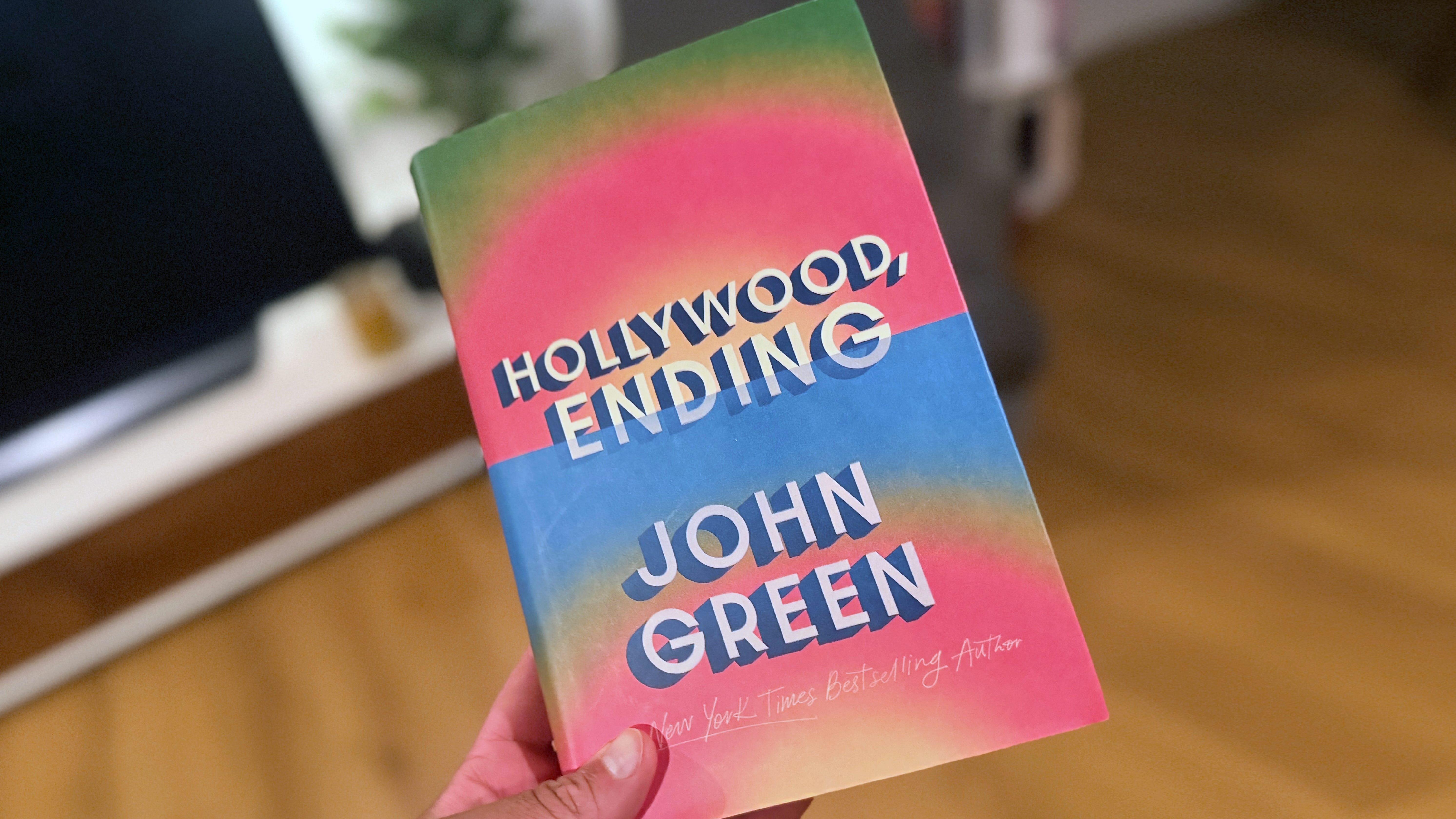
John Green has finally written a novel for grown-ups, and it only took him eight years.
Hollywood, Ending, which landed in Australian bookshops through Penguin on September 22, is the 49-year-old’s first novel since 2017’s Turtles All the Way Down and his first written squarely for adult readers.
For anyone who sobbed through The Fault in Our Stars in 2012, that is a very big deal.
I wanted to love it. For long stretches, I did. But I closed the book feeling like the best version of this story is still sitting somewhere in those eight years of rewrites.
What it’s about
The novel follows Kai Laramie and Juniper Castillo, two rising actors cast in a buzzy biopic called Andy Warhol Never Gets Old.
Juniper is a former Nickelodeon child star trying to be taken seriously. Kai is on his very first film set.
They fall for each other during the shoot. Then the movie blows up, and so do their lives.
Green tells the story through both points of view, from the first days on location through to the premiere and the press junket that comes with it.

What Green gets right
The world-building is the star here.
Green’s writing is so effortless that you forget you’re reading. The sets, the publicity machine, the strange intimacy of two co-stars selling a film together – it all feels like a world that exists.
Kai is a painfully endearing character. He is so lovable that I would have followed him anywhere.
I loved Juniper’s chapters just as much, and learning how each of them got here.
In my head, Juniper was a young Natalie Portman, although her backstory reminded me a lot of Jennette McCurdy and her memoir I’m Glad My Mom Died. Kai, for me, was Avan Jogia from the first page.
Both characters are carrying heavy and very different traumas.
Juniper is grieving her mother, who was also mentally and physically abusive, and we see that childhood in some difficult flashbacks.
Kai was abused by a teacher when he was in high school and had to testify at the trial.
I thought all of it was handled with real sensitivity.

Where it lost me
Handled with sensitivity is not the same as fully explored, though.
Lanie Brice at Reading, Writing, and Me put her finger on it better than I can: Green takes the most difficult and pivotal scenes in the book and reduces them to summary.
The first time Kai and Juniper sleep together should be enormous for a character with Kai’s history. Instead, as Brice points out, it is over in a single line: “And then they had sex.”
We get the before and we get the after. We never get to watch Kai work through it.
There are not many novels about what moving forward looks like years after sexual assault, rather than in the immediate aftermath. This could have been one of the great ones.
For me, the ending has the same problem. Mild spoiler: late in the book, a mentor figure betrays Kai and Juniper’s trust in a huge way.
Beyond some surface-level anger, it is brushed aside in a rushed final stretch.
Kai has already been hurt by an adult he trusted. Being hurt by another one, now that he is an adult himself, deserved a proper reckoning.
When Kai finally snaps, it makes sense. It also arrives suddenly, like a twist the book has not quite earned, and then it is fixed with the ease of a romance novel.
Meanwhile, we sit through a lot of clunky dialogue from the pair’s next project, a fantasy movie, when I would have traded all of it for one more real conversation between them.
It makes the love story harder to believe in than the book wants it to be.
What the critics are saying
I’m certainly in the minority here.
Review aggregator Book Marks has the novel sitting at “Rave”, based on four reviews.
In The New York Times Book Review, David Canfield wrote that Kai emerges vividly on the page while Juniper is approached too tentatively, but still called the novel “far more grown-up” than anything Green has delivered before.
On Goodreads, it was sitting at 4.27 stars from more than 8000 ratings at the time of writing.
Should you listen instead?
If you are on the fence, the audiobook might be the way in.
It is narrated by Julia Whelan (best known for her role as Grace Manning in Once and Again) and Zachary Chastain, and I have seen it singled out for praise.
According to Kirkus Reviews, Green said he personally asked whether the production could get Whelan.
The audio edition also includes a bonus conversation between Green and both narrators about how it was cast and their experience connecting with these characters.

The verdict
Hollywood, Ending is a beautifully written book about two people I adored, which keeps looking away at the exact moments I most wanted it to look closer.
I’d still tell you to read it. Kai alone is worth it.
I just hope it is not another nine years before Green gets to try again.
Hollywood, Ending is out now in paperback, ebook and audio through Penguin (RRP $34.99). A hardback edition is now available in Australian stores.
If you or someone you know is impacted by sexual assault, domestic or family violence, call 1800RESPECT on 1800 737 732.