


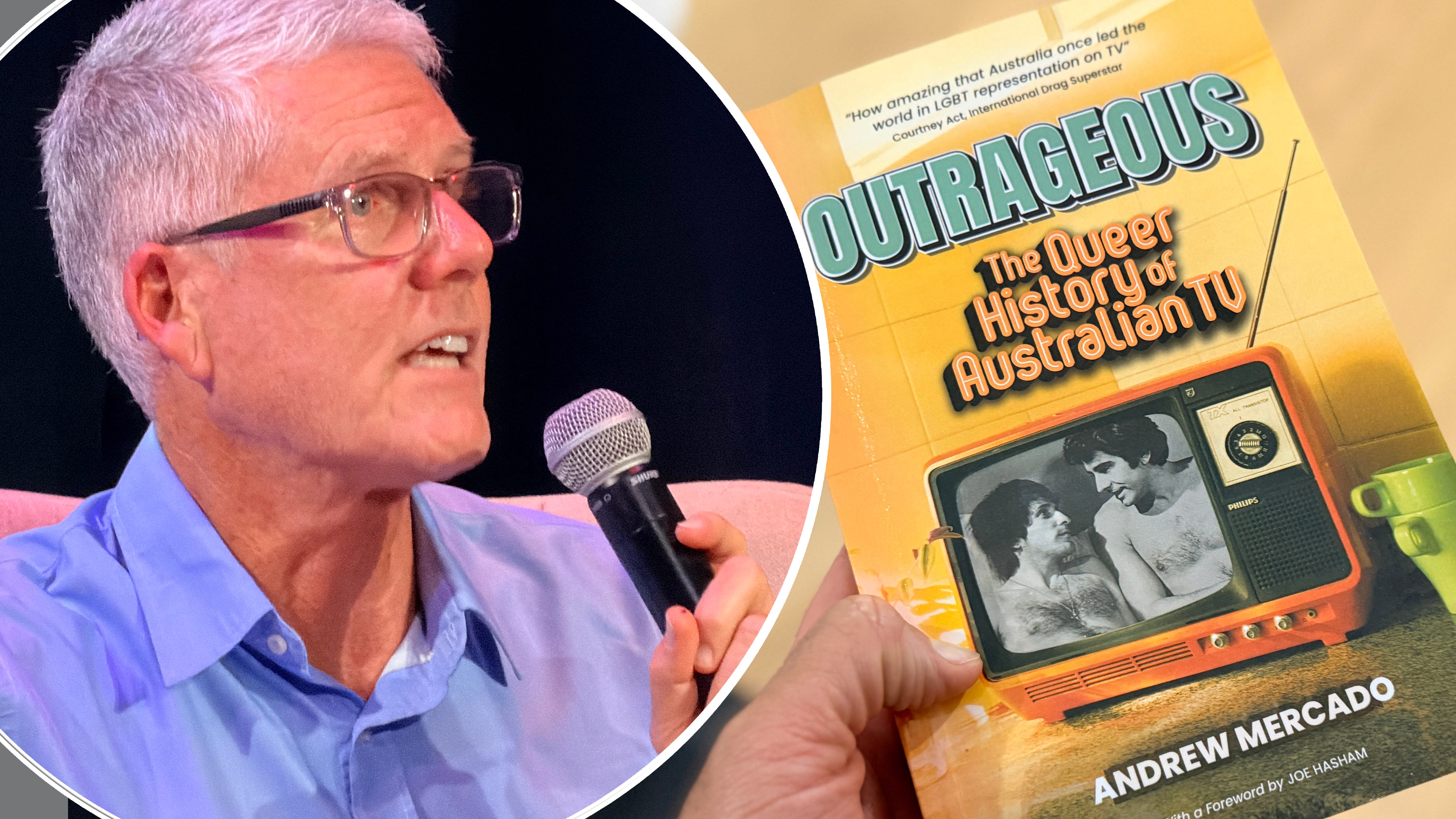
Australian television led the world in putting queer characters on screen in the 1970s, and TV historian Andrew Mercado is determined that nobody forgets it.
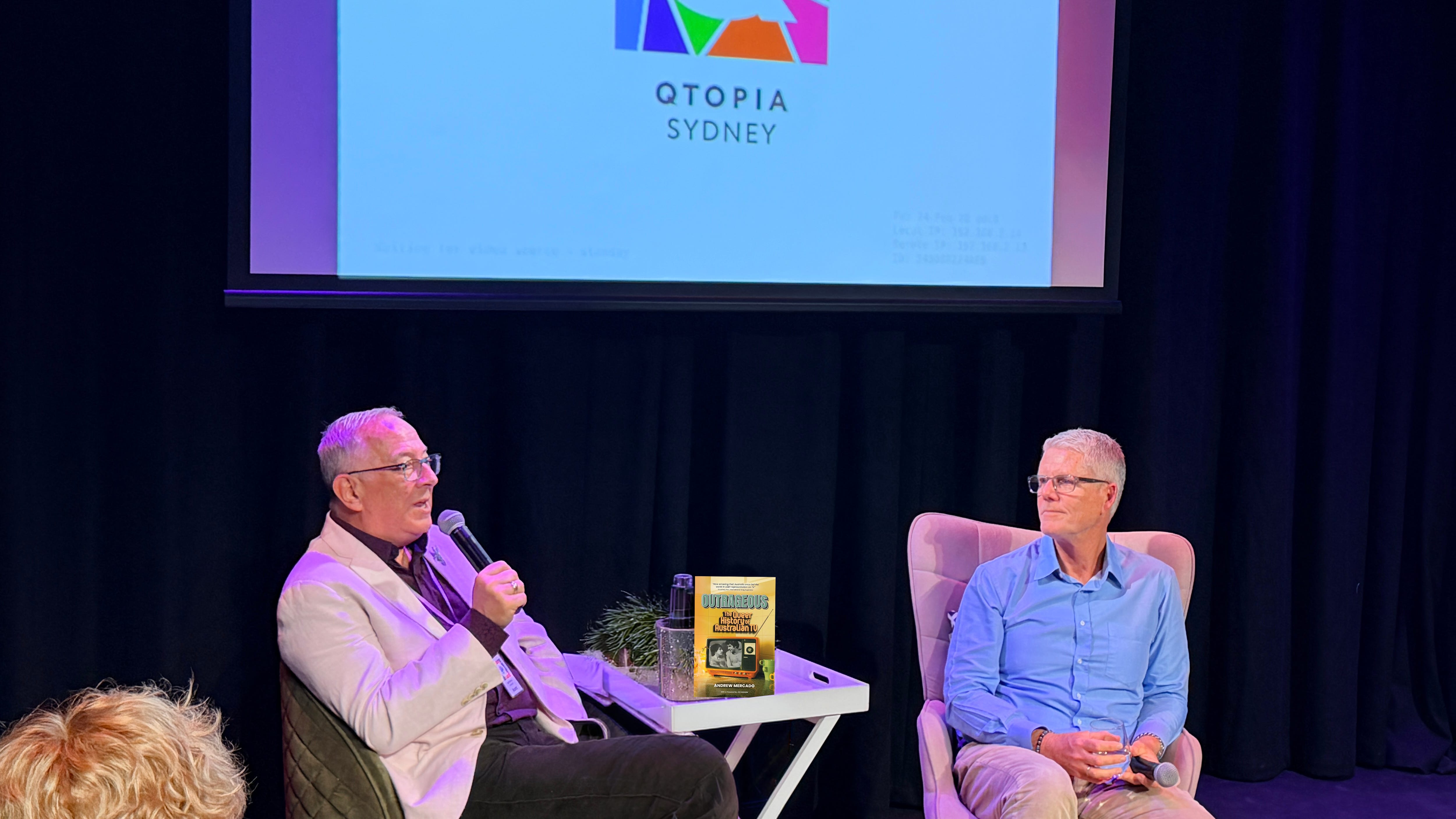
Mercado screened his documentary Outrageous: The Queer History of Australian TV at Qtopia Sydney in Darlinghurst on Monday night, celebrating the release of his tie-in book of the same name.
It was the first time the half-hour film had been shown since it premiered during WorldPride in 2023, and the room was stacked with people who made that history.
Judy Nunn, whose Vicki Stafford shared what the documentary calls the first same-sex kiss on a TV drama anywhere in the world with Helen Hemingway’s Felicity on The Box, was in the audience.
So was Damian Rice, who played gay doctor Martin Dempsey on the ABC’s G.P., and former High Court judge Michael Kirby, who appears in the film.
Five Minute Call stars Helen Dallimore and Simon Burke, The Family Law‘s Anthony Brandon Wong and The Traitors Australia host Gretel Killeen were also there.

I walked in thinking I knew my queer TV history. I walked out floored by how much I didn’t.
I knew Number 96 broke ground when Carlotta played Robyn Ross, a transgender character played by a transgender performer. I didn’t know the same show also gave the world its first regular gay and bisexual characters.

Number 96 premiered on the 0-10 Network on March 13, 1972, and ran for 1218 episodes until August 1977.
Joe Hasham’s Don Finlayson, a kind and dependable lawyer, was there for the whole run. His first boyfriend, photographer Bruce Taylor (Paul Weingott), is regarded as TV’s first bisexual character, and Don later lived with camp chef Dudley Butterfield (Chard Hayward).
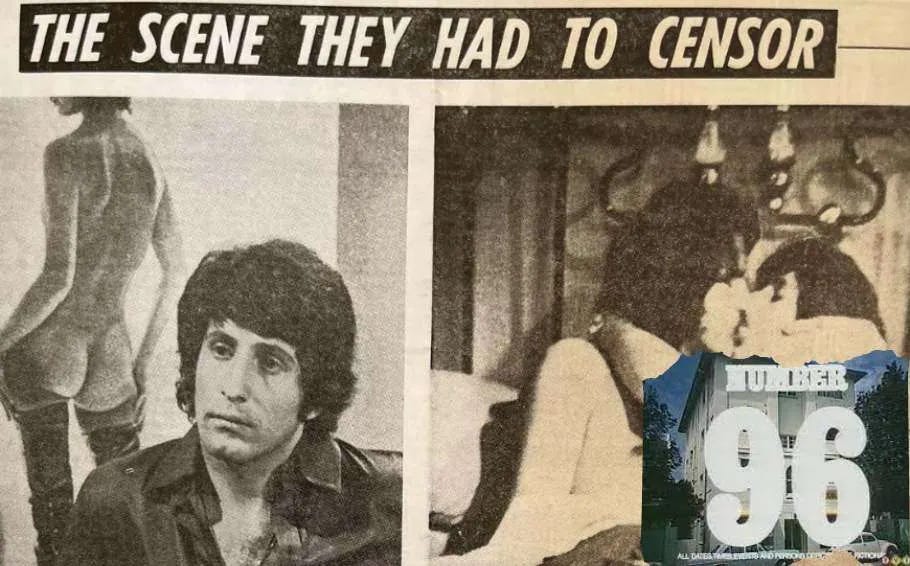
When the show began, Don wasn’t allowed to touch his boyfriend. By the end he was kissing his partner and sharing a bed with his lovers.
In the film, Kirby recalls watching with his partner in an era when being gay meant living “a very quiet and private life”.
He believes the show helped Australia respond to HIV better than most countries, saying it was “much more important than learned lectures by doctors and lawyers like me”.
In a Q&A with Qtopia community engagement manager Scott Whitmont after the screening, Mercado traced the story back to Graham Kennedy.
“Graham Kennedy was 23 years old when he began on TV in 1957 and, literally within a few years, they called him the king of Australian TV, but the truth was that he was a queen,” Mercado said.
“He had put himself so far into that closet that when eventually it was OK for him to come out, he just couldn’t bring himself to do it.”
Mercado said Channel 10 executives once asked producer Bill Harmon to make Hasham’s character straight to capitalise on his popularity.
According to Mercado, Harmon told the network: “Don’t ever ask us to do that again, or we’ll take the show off you and give it to Channel Nine.”
Researching the book also revealed what the publicity machine left out.
Hasham and Hayward played a couple for years, Mercado said, yet there was “not one single publicity still of them taken together because they knew the mainstream press weren’t going to run it”.
Then came the 1980s.
“We’d led the world in the ‘70s with these characters and then it all went backwards in the ‘80s,” he said. “And it went backwards because they pretended it didn’t happen.”
Mercado said Reg Grundy studied Number 96 and The Box closely enough to time the commercial breaks and count the cliffhangers, then built a run of soaps on the formula. Grundy would go on to produce Prisoner, The Young Doctors, Sons and Daughters and Neighbours.
“But what’s the one ingredient they don’t take from Number 96 and The Box? It’s the gay characters,” he said.

The biggest response of the night came when Mercado was asked about pitching the documentary to networks as a three-part series. Both the ABC and Channel 10 took it seriously, he said, before it stalled further up the chain.
He told the audience he had pitched 10 on its own history as “the first woke network in the world”, and he wants the word back.
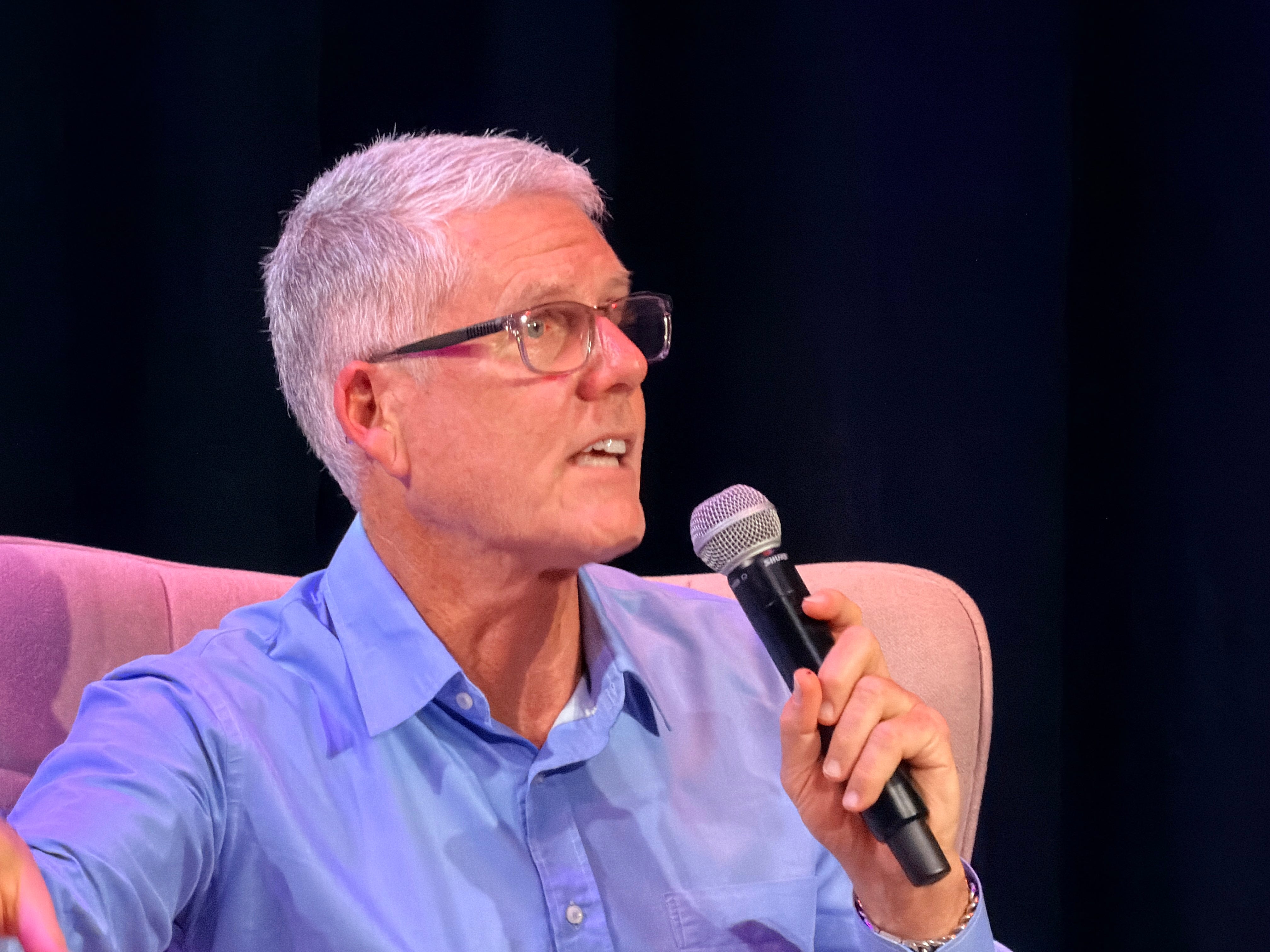
“If someone says to you something on TV is woke, you say to them, tell me what it is, because somewhere that character is giving a young child a vision of themselves in the future.”
For Mercado, who grew up in Brisbane, that vision was a Sydney apartment block.
“I can distinctly remember when I would watch Number 96 thinking, oh, I just need to move to Sydney and move into a building like that,” he said.
Asked by Wong where representation stands in 2026, Mercado said queer characters on Australian drama are still often supporting players.
“I sometimes feel that they’re ticking a box,” he said.
The book stops at 1999, and Mercado said any second volume should be co-written with a young queer writer who grew up on reality TV.
As for the documentary, he plans to take it to Adelaide and Perth before releasing it free online.
“Eventually that needs to be seen by everyone,” he said.
I loved it, and I’m with Mercado: this deserves to be the three-part series he dreamed of. For his sake and ours, I hope a network finally says yes.
Outrageous: The Queer History of Australian TV by Andrew Mercado is out now. Buy the book here.
Keep the conversation going
If you work in Australian media and care about how LGBTQIA+ stories are told, Media Pride’s End of Year Celebration is on Thursday, November 19, from 6pm to 9pm in the Up Lounge at The Imperial Hotel, Erskineville.
Join the mailing list and hear about future Media Pride events.
Helen Dallimore and Simon Burke's 'Five Minute Call' is the funniest comedy every theatre nerd needs to watch

Every night, five minutes before curtain, two musical theatre veterans lock themselves in a dressing room and let it all out. That is the entire premise of Five Minute Call, and I am obsessed.