


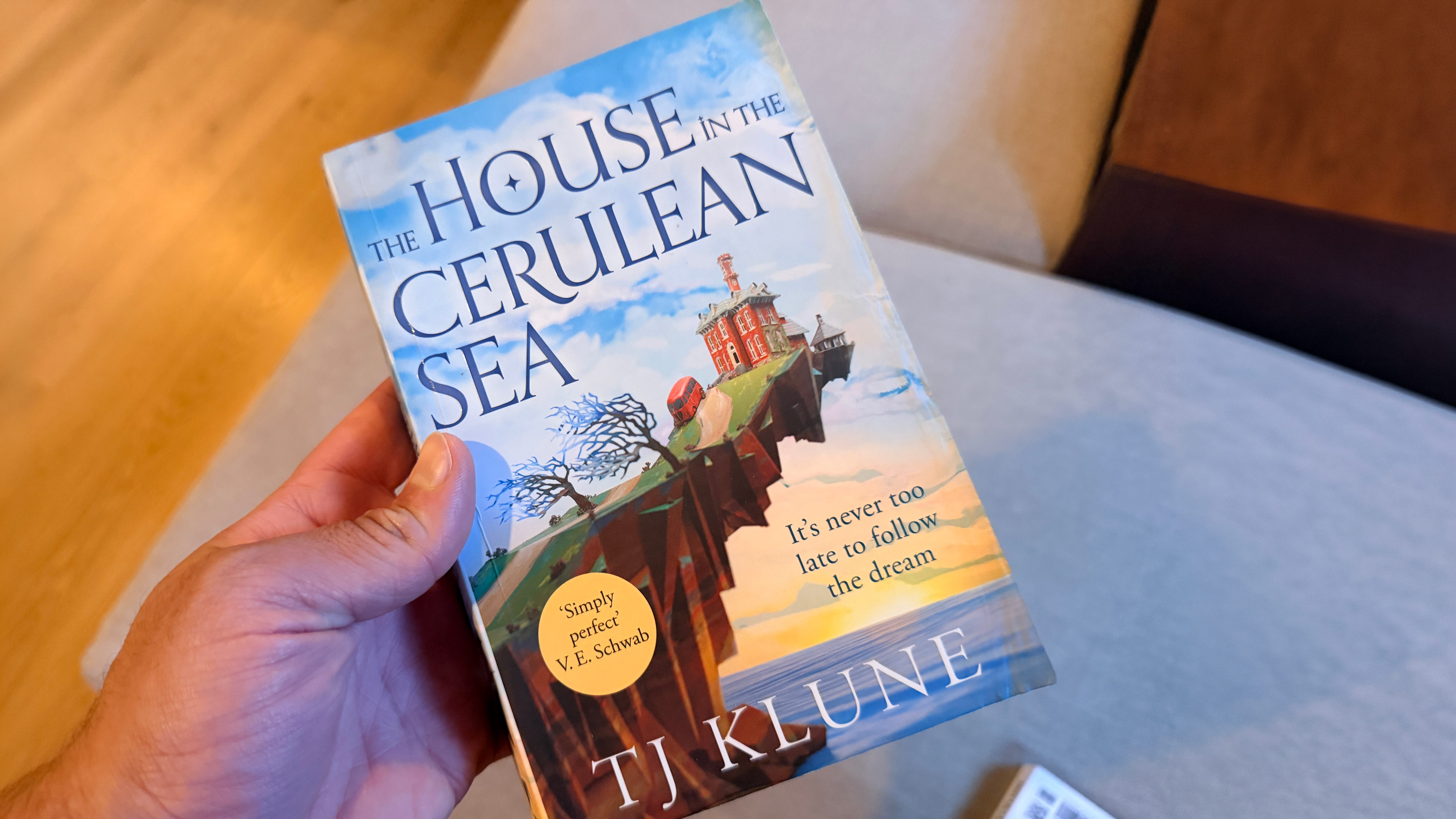
My friend Pixie told me to read The House in the Cerulean Sea years ago. I should have listened.
TJ Klune’s 2020 fantasy sat on my to-be-read pile for an embarrassingly long time, and it took finishing his YA superhero series The Extraordinaries to send me straight to it.
I went in expecting a queer romance. There is one, and it is lovely, but this book is about so much more than that.
It is about family, connection and being there for other people. It is painfully beautiful, and I loved it.
Linus Baker is a by-the-book caseworker at the Department in Charge of Magical Youth, or DICOMY, who goes home each night to his records and his cranky cat, Calliope.
Then Extremely Upper Management hands him a classified assignment: travel to an orphanage on remote Marsyas Island, observe the six children who live there and their caretaker, Arthur Parnassus, and report back on whether the place should be shut down.

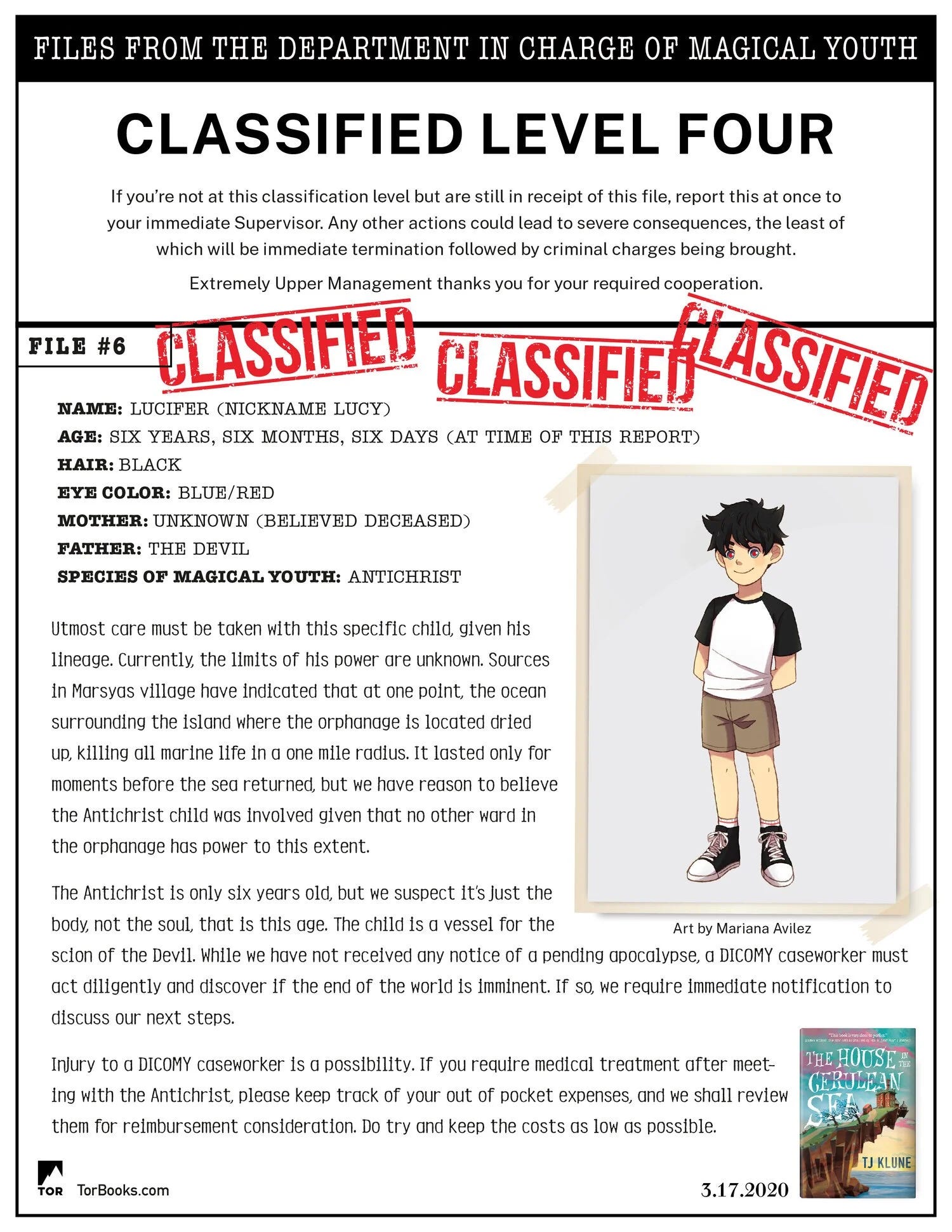
The children are the heart of it. There is Talia, a bearded garden gnome; Phee, a forest sprite; Theodore, a wyvern; Sal, a shy shapeshifter; Chauncey, a green blob of unknown species whose great dream is to be a bellhop; and Lucy, short for Lucifer, who is six years old and also the Antichrist.
Klune gives every one of them a distinct voice, and watching Linus go from clutching his rule book to fighting for these kids is the real love story here.
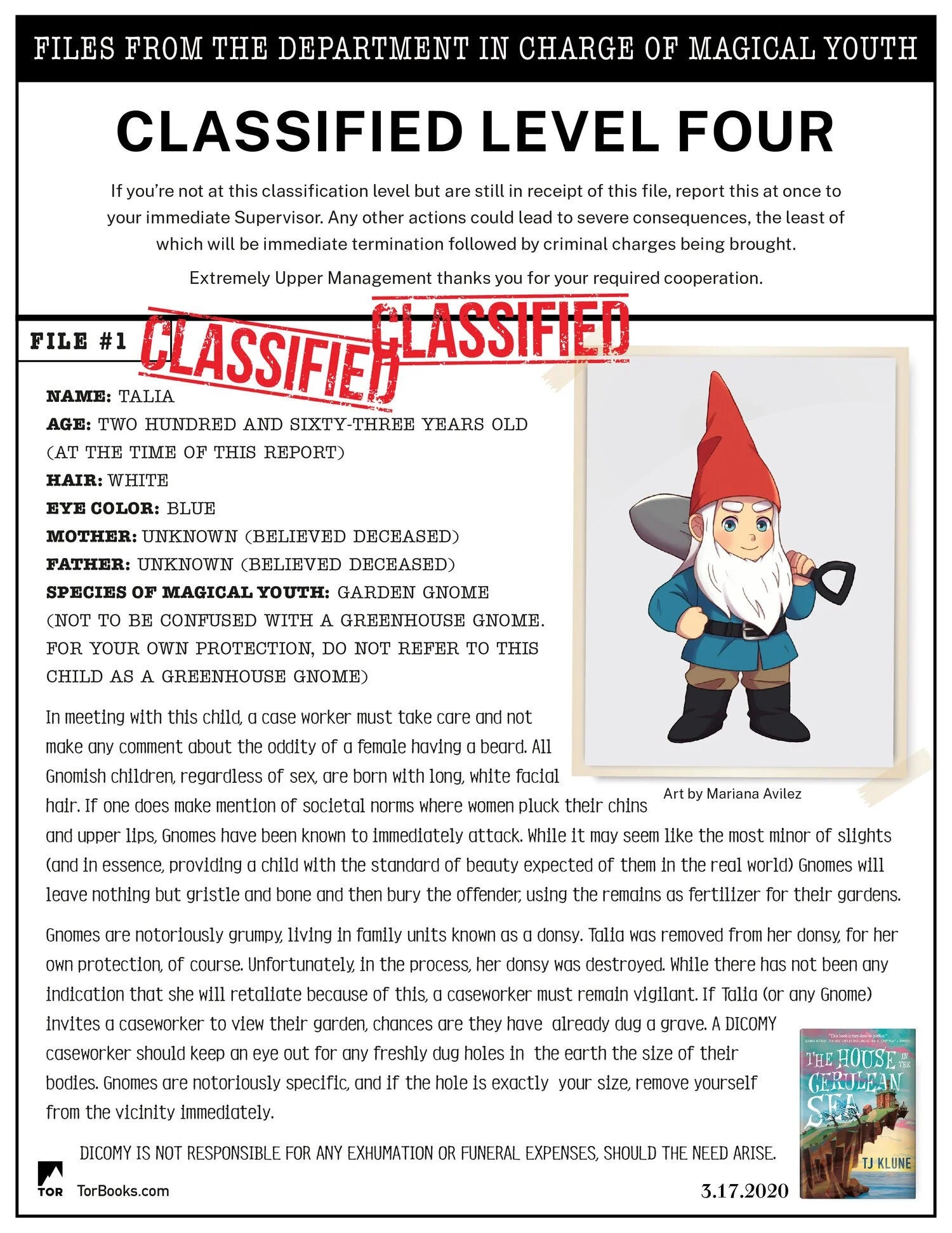
The humour is a huge part of the charm, and nothing shows it off better than the mock DICOMY case files Tor released for the children, illustrated by Mariana Avilez.
Talia’s file lists her as 263 years old and warns caseworkers never to call her a greenhouse gnome, for their own protection. If she invites you to see her garden, it suggests checking for a freshly dug hole in your exact size.
Lucy’s file gives his age as “six years, six months, six days” and asks any caseworker injured while meeting him to keep their medical costs down.
It is bureaucracy played as deadpan comedy, and it tells you everything about the cold system Linus works for and the warmth he finds on the island.
As for the romance, Linus and Arthur’s story is slow, gentle and built on small moments of care, not heat.
Klune has spoken about how his asexuality influences his writing, and you can feel it in a book where romantic love is just one kind among many. The love between a carer and a child, and between kids who have chosen each other as siblings, gets just as much weight.
Underneath the whimsy is a pointed story about prejudice, and about how fear of people who are different gets written into policy. It is also about what one person can do once they stop following orders and start paying attention.
Is it sweet? Very. You will probably see where the plot is heading, too. I did not mind one bit.
It is worth knowing the book has drawn criticism. Klune has said the story was partly inspired by the Sixties Scoop, in which Indigenous children in Canada were removed from their families, and some readers feel a feel-good fantasy was the wrong vehicle for that history. I could imagine links to Australia’s Stolen Generation.

The House in the Cerulean Sea became a New York Times bestseller and won the Alex Award and the Mythopoeic Fantasy Award in 2021.
A sequel, Somewhere Beyond the Sea, followed in September 2024 and went to No.1 on the New York Times list. Together the two books have sold more than 2 million copies worldwide, according to TheWrap.
The same outlet reported in April that Warner Bros. Animation is developing an animated series based on the novel, with no cast or creative team announced yet.
Both books are available in Australia through Pan Macmillan.
I can’t wait to read the sequel. I just wish I had listened to Pixie sooner!
‘Stop changing the wording’: ‘Fruit Fly’ author takes aim at M/M romance at sold-out Sydney event

Josh Silver doesn’t own a turtleneck – and he’d quite like the literary world to stop expecting one.