


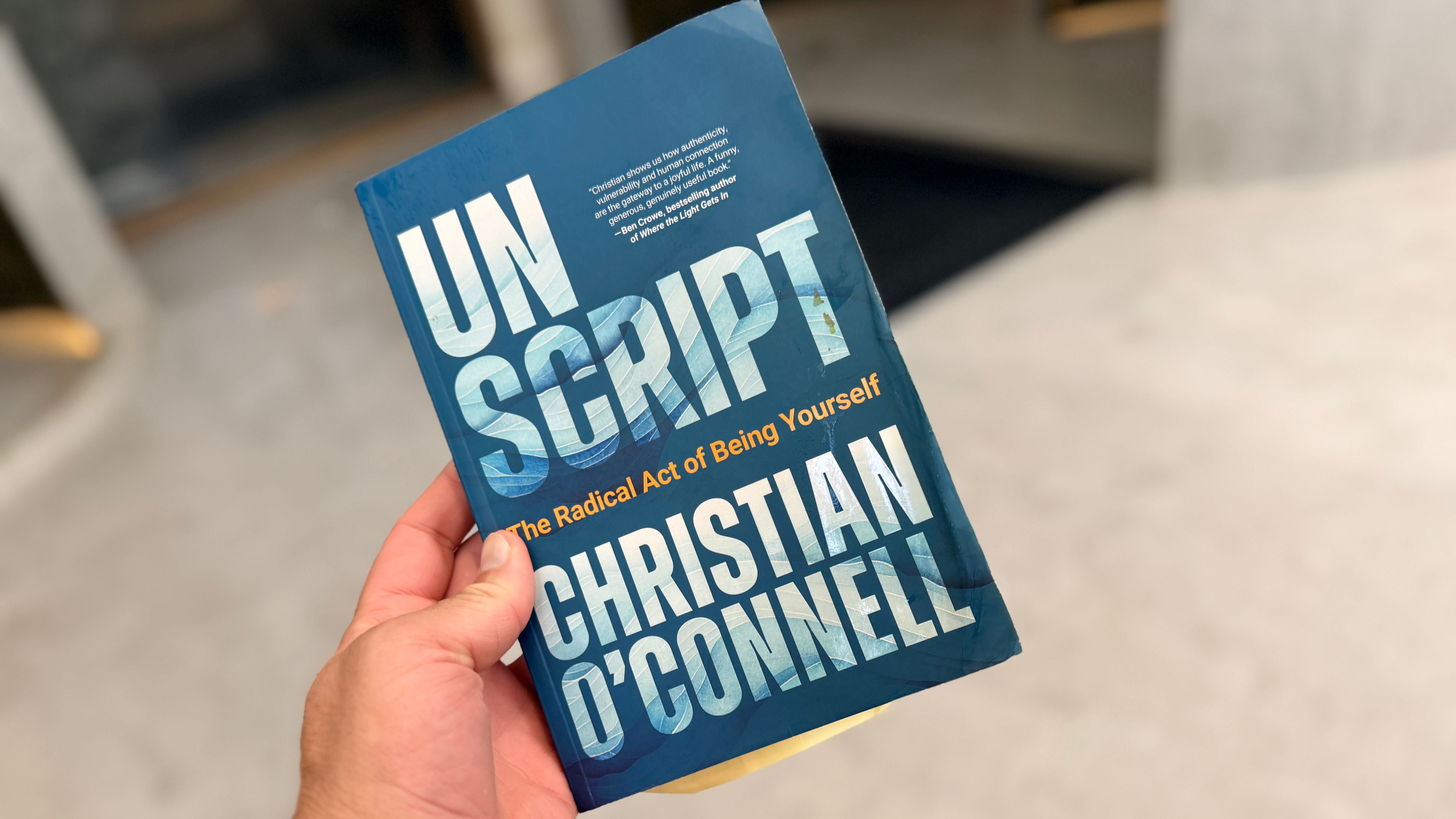
I’m not a radio person.
I couldn’t have picked Christian O’Connell out of a line-up before I stumbled on his new book, Unscript: The Radical Act of Being Yourself, by complete chance.
Then I hit the instruction that sold me: stop trying to improve.
The pressure came off immediately.
The irony is that I learnt a lot from this book that I want to bring into my own life.
For the uninitiated, and I was one, O’Connell is the British broadcaster who walked away from a top-rating London breakfast show in 2018 to start again in Melbourne.
His Gold 104.3 breakfast show now airs around the country, and his publisher bills him as the only broadcaster to rate No.1 on two continents.
Unscript, published by Wiley in July 2026, argues that most of us are performing from scripts we never chose, handed down by family, culture and fear.
O’Connell calls himself your “uncoach”. He isn’t Tony Robbins, and he isn’t writing from a mountaintop of mastery.
To his credit, he says he’s writing from the middle of the mess, which is where most of us live.
“The best moments in life, in connection, happen when you stop trying to be good enough and just show up as you are,” he writes.

From MAFS to the meaning of life
It helps that he’s funny.
During Melbourne’s lockdown, O’Connell’s family discovered Married At First Sight, or as he calls it, “Mating Absolute Ferals”
The gag has a point. The quality of your relationships determines the quality of your life, he argues. Not your job, not your money, not even your achievements.
Then comes the scary observation: the people most satisfied in their relationships at 50 were the healthiest at 80. The lonely ones died earlier, got sick faster and their brains deteriorated more quickly.
He also shares a line from an interview he did with Jerry Seinfeld. Asked what it’s like to make someone laugh, the comedian replied: “A few seconds of weightlessness.”
‘Eat me if you wish’
The story I’ll carry with me is an old one about a Tibetan yogi named Milarepa, who returns to his cave to find it overrun by demons.
He tries chasing them out. He tries lecturing them. Neither works.
Only when he surrenders do they vanish, all but the biggest and fiercest. So Milarepa walks over and puts his head in its mouth.
“Eat me if you wish,” he says, and the demon bows and disappears.
O’Connell’s point is that we treat fear the same way. First we fight it, then we try to outsmart it with more preparation, and neither works.
He puts it to the test before a keynote in a massive theatre, having asked for a blank autocue because reading from one would contradict the book he was writing.
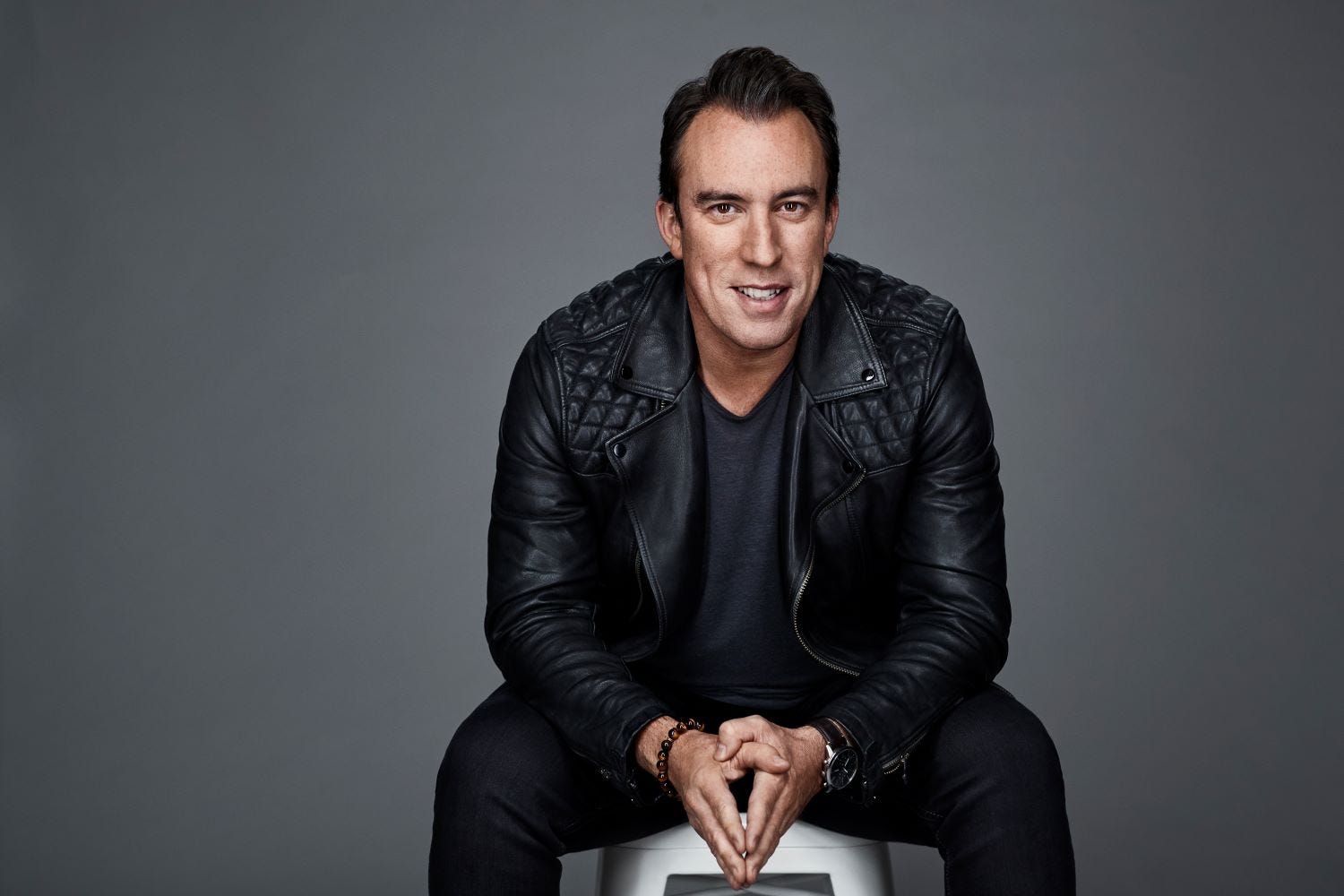
A minute before he walks on, someone very senior puts a hand on his shoulder and says: “This has to go well.”
O’Connell mutters “Eat me” to himself, forgetting he’s already mic’d up. The whole tech crew hears it.
You will wipe out
The book’s best advice is about what happens when it goes wrong, because it will.
O’Connell says he wipes out on live radio regularly, in front of hundreds of thousands of people, and borrows a surfing image to explain why it doesn’t matter.
“Wipeouts aren’t the opposite of surfing. They’re part of surfing,” he writes.
He’s just as good on listening. Most of us, he says, start hunting for a fix within 30 seconds of someone opening up, which makes the conversation about us.
His alternative is curiosity. Swap “How do I fix this?” for “Tell me more”.
Borrowing from executive coach Joe Hudson, he also suggests dropping “why” questions, which can sound like accusations, for “how” and “what” questions that open people up.
There’s a practical public speaking toolkit too, from naming your nerves out loud to a double-breath technique he credits to Professor Andrew Huberman, and each chapter ends with reflection prompts he calls “Unfolders”.
And there’s a lovely passage on why being funny is a brave act. Courage, he notes, comes from the Latin cor, meaning heart. Not fearlessness, but fullness.
The verdict
I picked up Unscript knowing nothing about the man who wrote it. I finished it wanting to listen better, prepare less and stop treating every stumble as a failure.
One line has stayed with me: “You are not a person who has stories. You are the story.”
Not bad for a book that tells you to stop trying to improve.
Unscript: The Radical Act of Being Yourself by Christian O’Connell (Wiley, $34.95) is out now. The audiobook is read by O’Connell.
Buy the book | Listen to the audiobook | Read the Goodreads reviews
For another take, I agree with so much of this Blue Wolf Reviews write-up.
Dymocks reveals 2026 Book of the Year shortlist, and four Aussies made the cut

Dymocks has revealed its shortlist for the 2026 Book of the Year, and a Sydney debut author I profiled just weeks ago has made the cut.