

Disclosure: Disney+ provided screeners of all eight episodes of VisionQuest for this review. No spoilers beyond the two-episode premiere.
VisionQuest, the final chapter of the trilogy that began with WandaVision, has landed on Disney+ and after devouring all eight episodes, I can tell you the wait was worth it.
The series arrived this week with a two-episode premiere on Tuesday October 13 with the rest of the season rolling out weekly.
Paul Bettany is back as Vision, James Spader returns as Ultron for the first time since 2015’s Avengers: Age of Ultron, and the whole thing is run by Terry Matalas, the showrunner behind the third season of Star Trek: Picard.
What is VisionQuest about?
Here is the short version, no spoilers.
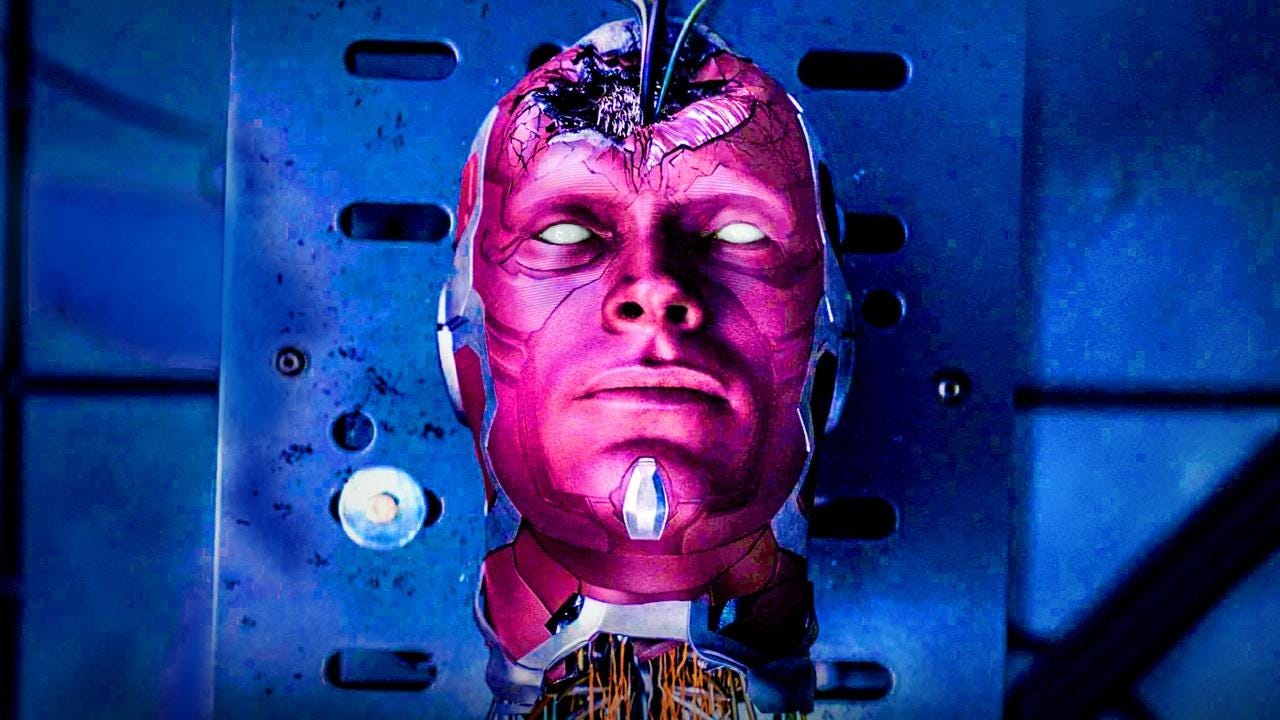
Vision died in Avengers: Infinity War. In WandaVision, his body was rebuilt by a shadowy government agency as an all-white, emotionless version of himself – “White Vision” – who had his memories restored in the finale and then simply flew off.
VisionQuest picks up years later. Vision has his memories back but no emotional connection to them, and he is living in hiding while a bounty hunter named Paladin (Todd Stashwick) closes in.
To work out who he is, Vision retreats into a virtual world inside his own mind – a vast mansion populated by human versions of every AI Tony Stark ever built: J.A.R.V.I.S. (James D’Arcy), F.R.I.D.A.Y. (Orla Brady), E.D.I.T.H. (Emily Hampshire) and the workshop bots D.U.M.-E and U.
Also in there, locked behind a firewall and passing the time by painting, is Ultron.
Bettany has described Ultron as someone who “has to be kept behind a pretty impressive firewall because he’s a psychopath”, according to Collider, and Spader has called their dynamic a “sort of father-son-therapist-psychopath” relationship. Both descriptions are accurate.
Then there’s the teenager. A mysterious young man (Ruaridh Mollica) crosses Vision’s path who may be his son Tommy – and if you finished Agatha All Along, you know exactly why that matters.
A refresher on WandaVision and Agatha All Along
WandaVision premiered on Disney+ in January 2021 and ran for nine episodes, following Wanda Maximoff (Elizabeth Olsen) and Vision living a suburban sitcom life that shifted through the decades – until the cracks started showing.
It was a grief story disguised as a sitcom homage, and it earned 23 Emmy nominations, winning three.
One of those wins was for a song I have not been able to shake since: “Agatha All Along”, the villain-reveal jingle written by Frozen songwriters Kristen Anderson-Lopez and Robert Lopez. It has sat in my top-10 most played songs every year since 2021. I am not exaggerating.
That song gave its name to the second series, Agatha All Along, which premiered in September 2024 and brought Kathryn Hahn’s Agatha Harkness back alongside Joe Locke as “Teen” – eventually revealed to be Billy Maximoff, Wanda and Vision’s son, reborn in another boy’s body.
Hahn earned a Golden Globe nomination, the show won the GLAAD Media Award for Outstanding New TV Series, and the finale ended with Billy setting out to find his twin brother, Tommy.
Which brings us back to VisionQuest.
Why it works… even if you’re not a Marvel person (like me)
I am not someone who has devoured the Marvel franchise. I have not seen every film. I could not tell you what happened in Multiverse of Madness without checking.
And VisionQuest still made sense to me.
Yes, the premise is complicated: a dead android rebuilt by the government, hiding a genocidal AI inside his head, chasing a son whose soul was moved into a drowned stranger’s body by his brother, who is himself in a different body. Written down, it sounds unhinged.
On screen, it is delicious. The show trusts you to follow along, and because the emotional stakes are so simple – a father trying to feel again, a son trying to find where he belongs, a monster insisting he loves them both – the lore becomes texture rather than homework.
READ MORE: ‘I finally get it’: why Spider-Man: Brand New Day made me a Marvel convert
Matalas has said each episode feels like a different kind of film, in the same way each WandaVision episode borrowed from a different sitcom era, and that structure keeps things moving. The mind-palace sequences are gorgeous – mid-century design, visual gags, a slightly malfunctioning family dinner vibe – while the real-world chase gives it a spine.
Spader is the standout. His Ultron is funny, menacing and oddly tender, sometimes in the same line. Bettany, who has been playing a version of this character for more than a decade, finally gets to play him as someone genuinely lost.
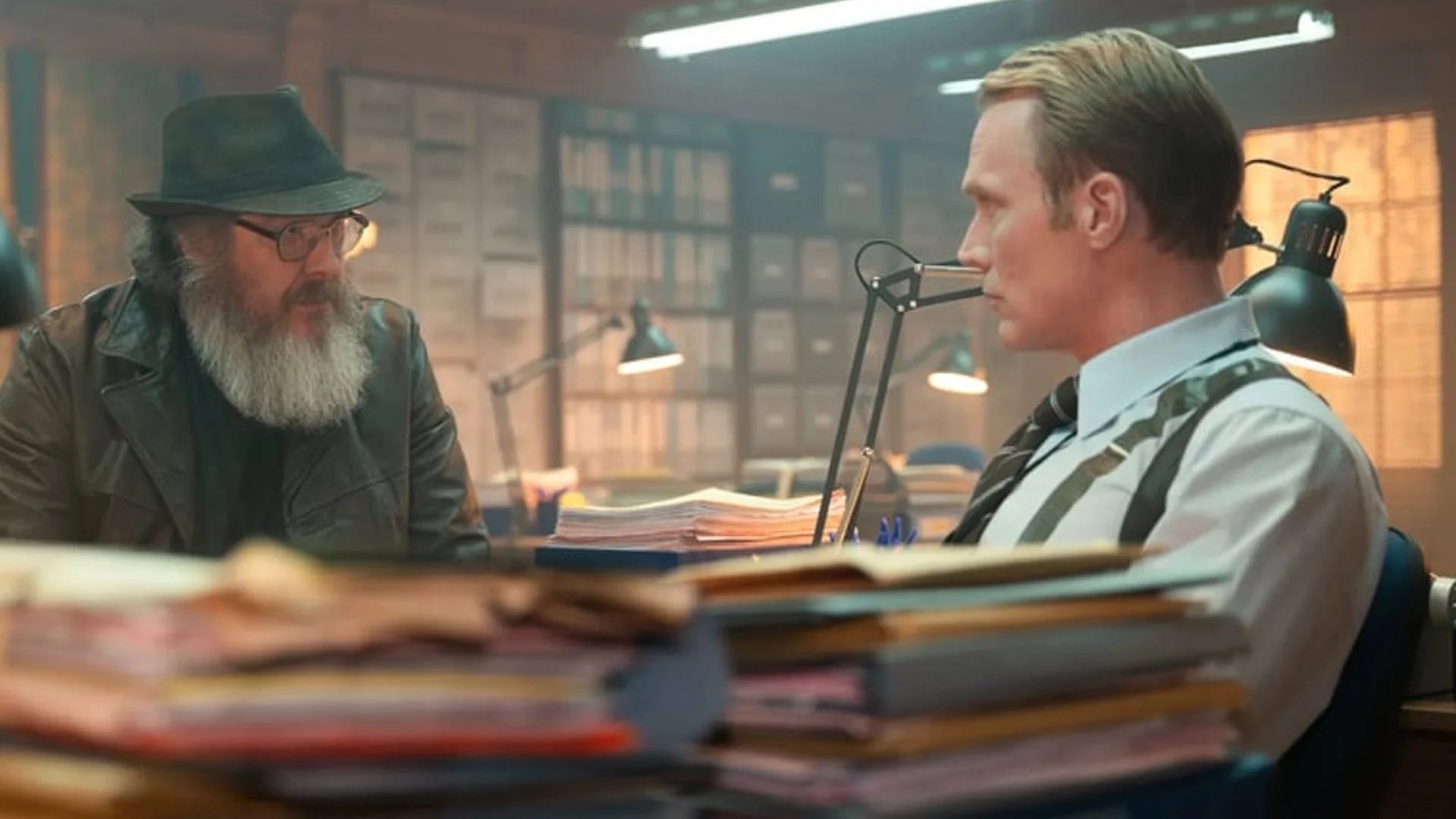
And Mollica’s Tommy, a small-time grifter searching for a purpose, as the actor has described him – is the heart of it.
Like a lot of people, I finished Agatha All Along desperate to see what happens next. Will the twins reunited on screen? I’m also desperate to see Vision reckon with what happened to Wanda. Whether VisionQuest delivers on either is not something I am going to spoil here. I will say the show is very aware of what you are hoping for.
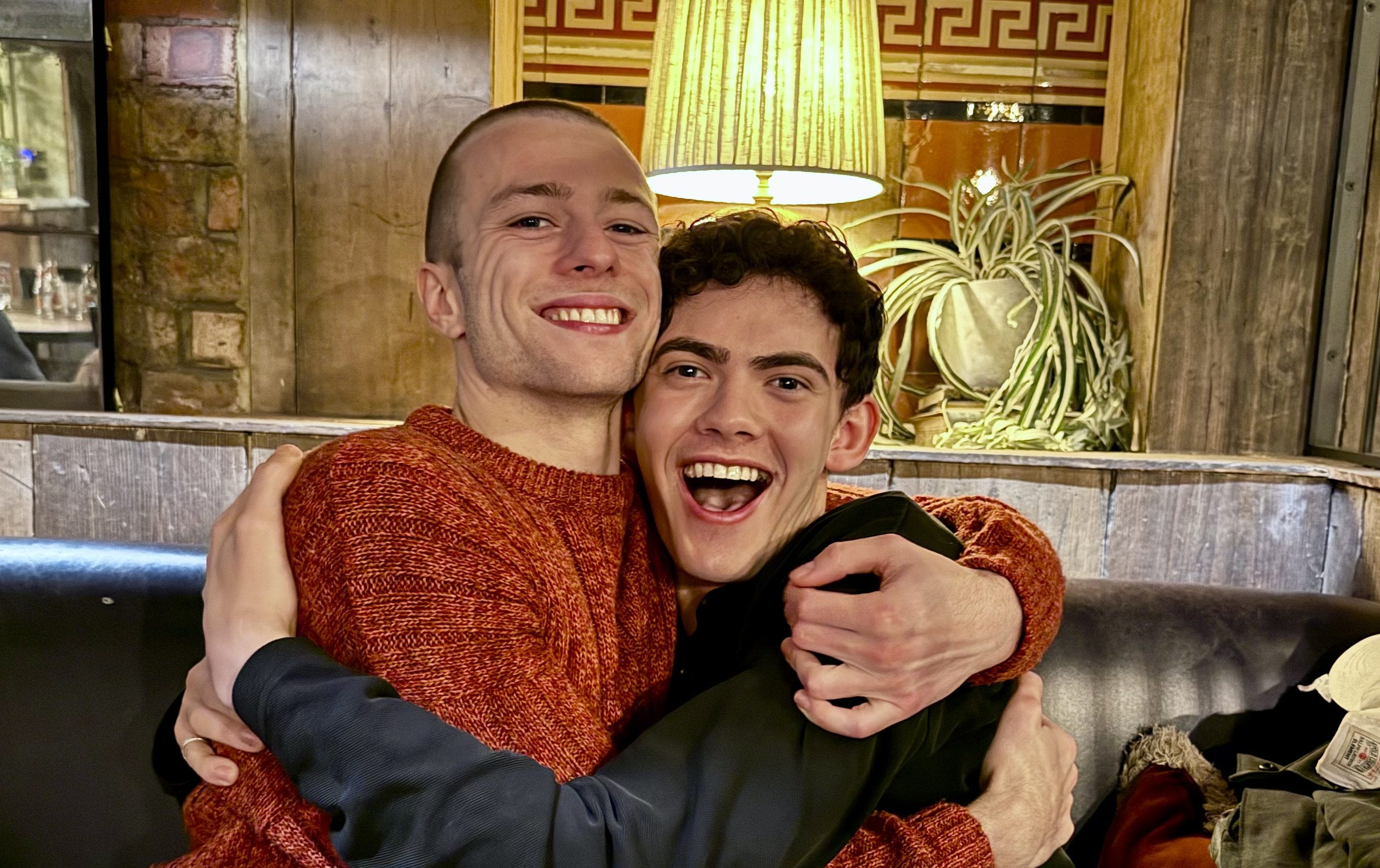
Interestingly Mollica made his London West End debut alongside Joe Locke in Clarkston, a play by Samuel D. Hunter, from September to November 2025.
The critics are split
Not everyone agrees. The Guardian’s review this week was notably cool on the series, and it is fair to say the inside-Vision’s-head concept will not be for everyone.
I land closer to Ashley Saunders at With Ashley and Company, who called it one of the most smartly constructed shows Marvel has released and argued it is “ultimately about what it means to be a family”. That is the version of the show I watched.
VisionQuest is not a lore dump. It is a story about fathers and sons, about whether someone raised by a monster can be anything other than a monster, and about what you do with memories you can no longer feel.
Thank you to Disney+ for the early look. The first two episodes are streaming now, with new episodes weekly and I cannot wait for everyone to see how it ends.
VisionQuest is streaming on Disney+.
Inside the Kit Haley’s debut novel being called Australia's answer to Heated Rivalry

Kit Haley wrote In Your Court in eight weeks, 16 hours a day, as a secret side project hidden from their own publishers. On Thursday night, Sydney’s romance readers packed into Romancing the Novel in Paddington to celebrate what came out the other side.